
Planetary Nebula SH2-290 In Cancer (SH2-290)
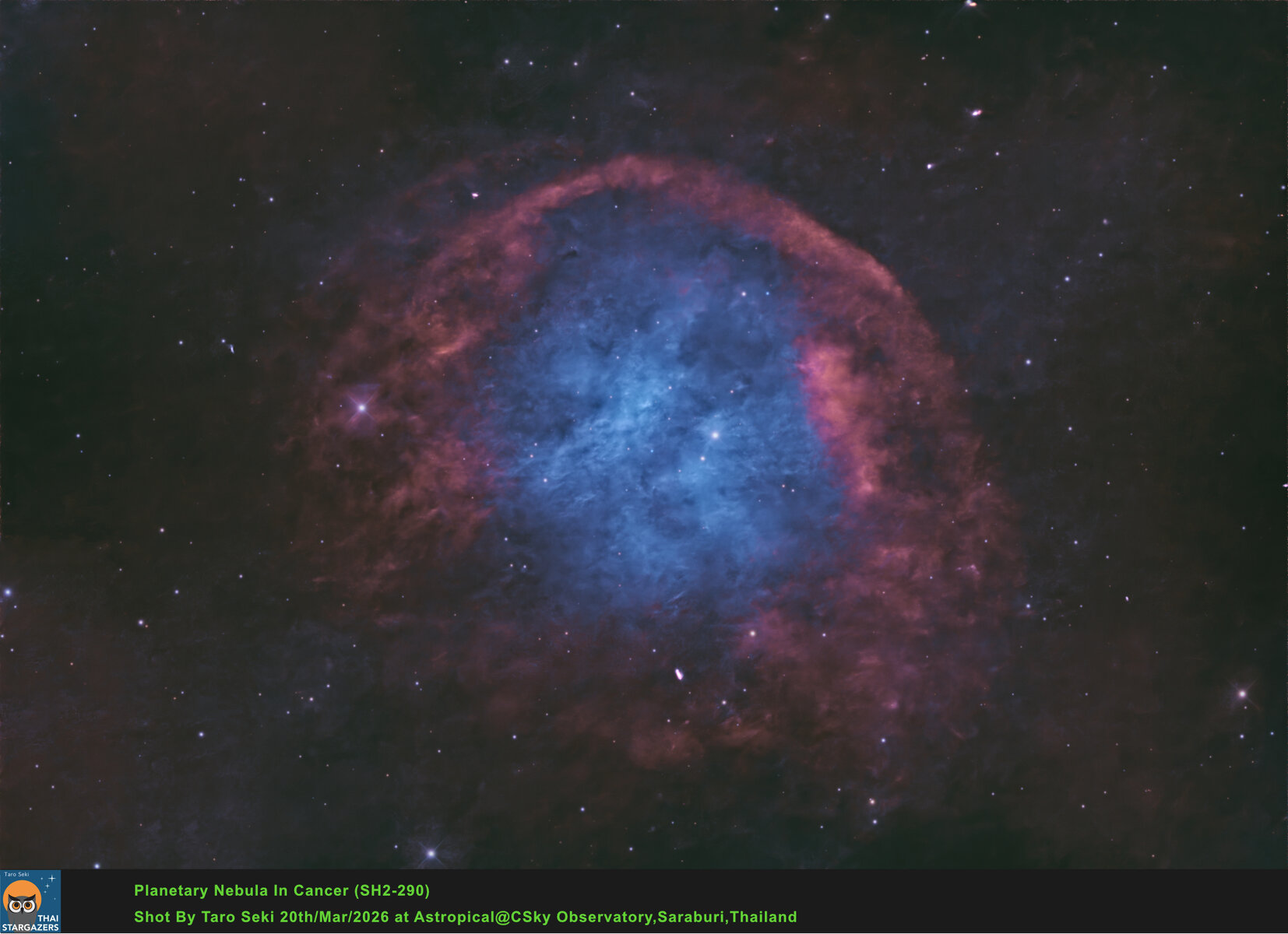
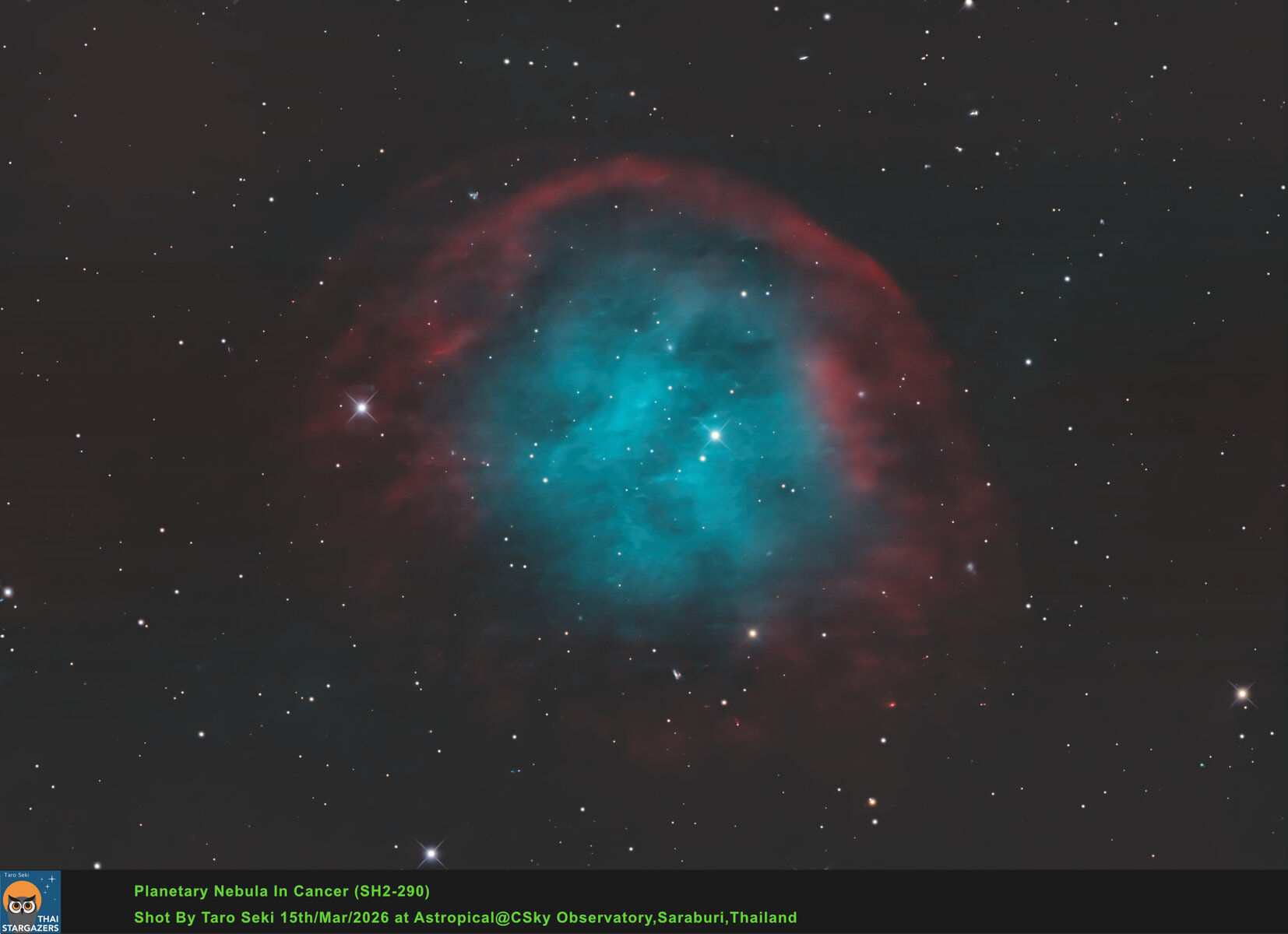
A large planetary nebula in the constellation Cancer
I spent six months trying to eliminate the banding noise, targeting this out-of-season subject.
A friend in my astrophotography group on Facebook recently shared a photo of this planetary nebula.
It was my first time seeing this nebula, and its size seemed just right for a 2000mm + MFT lens, so I decided to try photographing it.
Complete failure!!
After accumulating a certain amount of signal, I did some preliminary editing, but there was terrible banding noise in Ha and Oiii.
LRGB was fine.
I researched various methods to reduce banding noise and tried several reduction techniques, but I couldn't completely eliminate it.
Therefore, I'm ending this target for now.
I haven't changed any of my usual shooting parameters, so I need to figure out why there was so much banding this time.
Running noise and banding noise look somewhat similar, but their causes are different.
Running noise is caused by cool noise or color noise, and when guiding errors are corrected by stacking, points become lines, making them more noticeable. This can be resolved by dithering during shooting.
Banding noise is particularly noticeable with Narrow Band filters, appearing as countless scanline-like lines running from edge to edge of the screen. While the cause lies with the camera, my experience suggests it appears intermittently.
It seems to be appearing now. I think I need to investigate further by changing the shooting parameters and direction.
蟹座にある大きな惑星状星雲
FBの天文写真のグループの友人が先日この惑星状星雲の写真をシェアーされていた。
私的に初見の星雲で、大きさも2000mm+MFTでちょうど良い大きさに写るので、挑戦してみた。
惨敗!!
ある程度シグナルが溜まったところで仮編集をしたが、HaとOiiiに酷いBanding Noiseが出ている。
LRGBは問題ない。
とりあえず、Banding Noiseに関して色々調べてリダクションをしたが消しきれない。
よってこのターゲットはここで一旦終了。
普段と撮影パラメータを変えたわけでもないのに、何で今回こんなにBandingがでたのか原因を突き止めないといけない。
Running NoiseとBanding Noiseはちょっと見似ているが、原因そのものが違う。
Running Noiseはクールノイズやカラーノイズが原因でガイドズレの補正でスタックにより点が線になり目立つようになる。これは撮影時にディザ撮影で解消できる。
Banding Noiseは特にNarrow Bandフィルターで目立つようになる画面の端から端までを走査線のようなものが無数に走る。原因はカメラ側にあるのだが、今までの経験でなぜか出る時期と出ない時期がある気がする。
今はそれが出る時期になってしまったようだ。撮影パラメータや撮影方向を変えて色々調査が必要に思う。
Place: Astropical@CSky Observatory Saraburi Thailand (Bortle Class 3, Moon Phase 1.8%)
Shot Date:20th / Mar / 2026 20:48 (UTC+7)
TS TSRC10T Carbon Truss Prime Focus (250mm F/8 f/2000mm)
Filter: Optolong 3nm Ha,Oiii,Antlia V-Pro Lumi, SVBony RGB Sets
L :15X180Secs Total 45minutes
R :5X180Secs Total 15minutes
G :5X180Secs Total 15minutes
B :5X180Secs Total 15minutes
Ha :24X300Secs Total 120minutes
Oiii :24X300Secs Total 120minutes
Total 5hours 30minutes
Palette: Target HOO
Star L-RGB
Gain: 200 , Offset 5
CCD: Player One Artemis-M Pro Bin2
Mount :iOptron CEM70G
De-Rotator : Wanderer Mini V2 (0 Deg)
Guide: SVBony 60mm F/4, QHY290C.
Controler: NINA
Pre-Processing APP Drizzle Droplet 0.9 Scale 1.0
Post-Processing PI,Affinity
Shot By Taro Seki Astropical.uk

コメント